
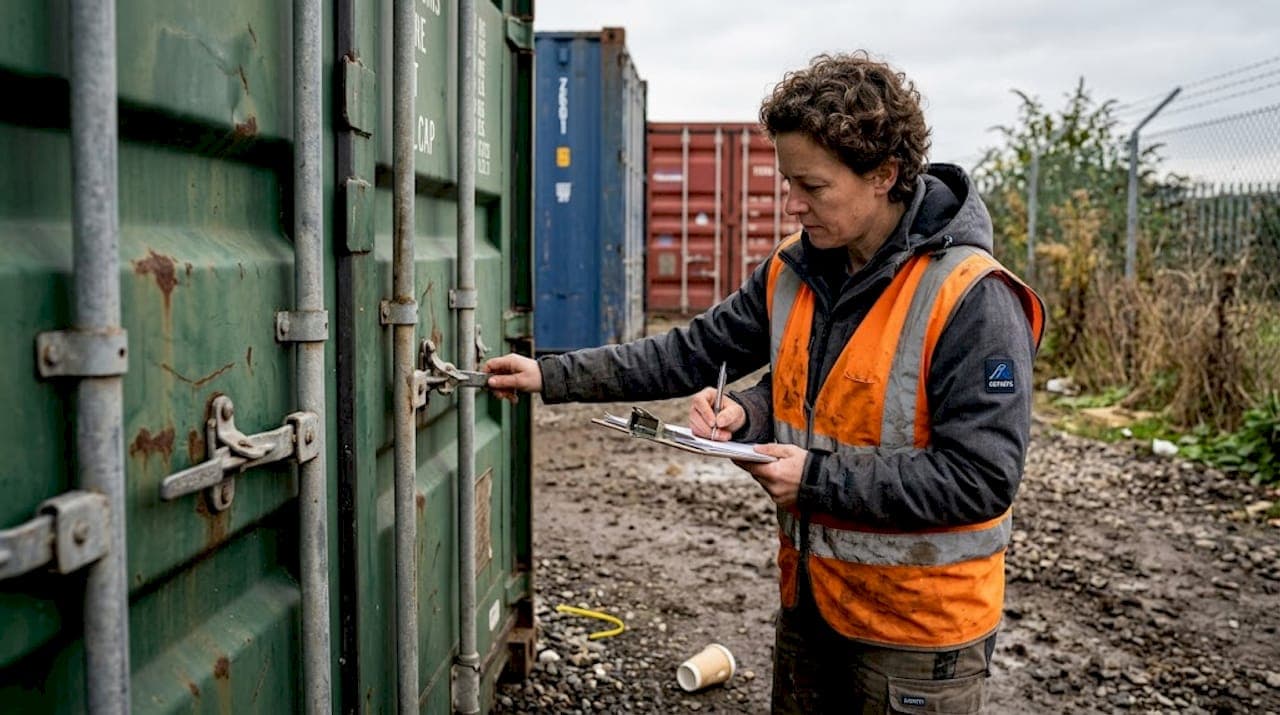
Shipping container theft is not a minor inconvenience. Construction sites alone account for U.S. theft costs between $300 million and $1 billion annually, and recovery rates drop below 25% when GPS tracking is absent. For business owners and project managers relying on containers for storage or workspace, a single breach can halt operations, destroy inventory, and trigger insurance headaches. This guide covers everything you need: how to assess your risk, which tools to use, a proven step-by-step security process, and how to verify your setup holds up over time.
Table of Contents
- Assessing your risks and security needs
- Essential tools and materials for container security
- Step-by-step process to secure your shipping container
- Verifying security and avoiding common mistakes
- Why traditional methods aren't enough and what works best
- Secure your shipping container with the right solutions
- Frequently asked questions
Key Takeaways
| Point | Details |
|---|---|
| Assess risk first | Evaluate theft risks and container location before choosing your security setup. |
| Choose the right tools | Combine heavy-duty locks, anchoring systems, and smart tech for robust protection. |
| Follow step-by-step setup | Install equipment in correct order and follow best practices for maximum security. |
| Check regularly | Audit locks and alarms each month to catch vulnerabilities early. |
Assessing your risks and security needs
Before spending a dollar on locks or alarms, you need an honest look at your risk profile. Not every container faces the same threats. A unit storing power tools on an urban construction site faces very different risks than one holding retail inventory in a fenced suburban lot.
The three most common threats are theft, vandalism, and unauthorized access. Theft is the most costly. Vandalism creates liability and repair costs. Unauthorized access, often overlooked, exposes you to safety incidents and legal exposure.
Location is one of the biggest risk multipliers. Remote sites with low foot traffic are prime targets because criminals have more time and less chance of being seen. High-traffic urban sites face smash-and-grab style attacks. Containers near public roads or poorly lit areas are at elevated risk regardless of what is stored inside.
What you store also changes the equation. High-value tools, electronics, or materials require a higher security tier than general construction supplies. If your container serves as a commercial workspace or retail hub, the stakes are even higher.
| Risk level | Typical scenario | Recommended security tier |
|---|---|---|
| Low | Rural site, low-value storage | Basic padlock, periodic checks |
| Medium | Suburban lot, mixed inventory | Lock box, anchor bolts, lighting |
| High | Urban site, high-value tools | GPS, smart locks, alarm system |
| Critical | Active job site, electronics | Full layered system, 24/7 monitoring |
Key vulnerability factors to review:
- Visibility: Is the container visible from a road or public area?
- Lighting: Is the area well-lit at night?
- Fencing: Is there a perimeter barrier?
- Access control: Who has keys or codes?
- Monitoring: Are cameras or alarms in place?
Pro Tip: Complete a written risk assessment before purchasing any security equipment. A five-minute checklist now saves hours of incident reporting later. If you are still evaluating which container fits your operation, review the process for buying containers online to factor security needs into your purchase decision.
Essential tools and materials for container security
Once you understand your risk level, you can match the right tools to the job. Security equipment ranges from basic physical hardware to advanced digital systems. The good news is that even mid-tier setups deliver significant protection when installed correctly.
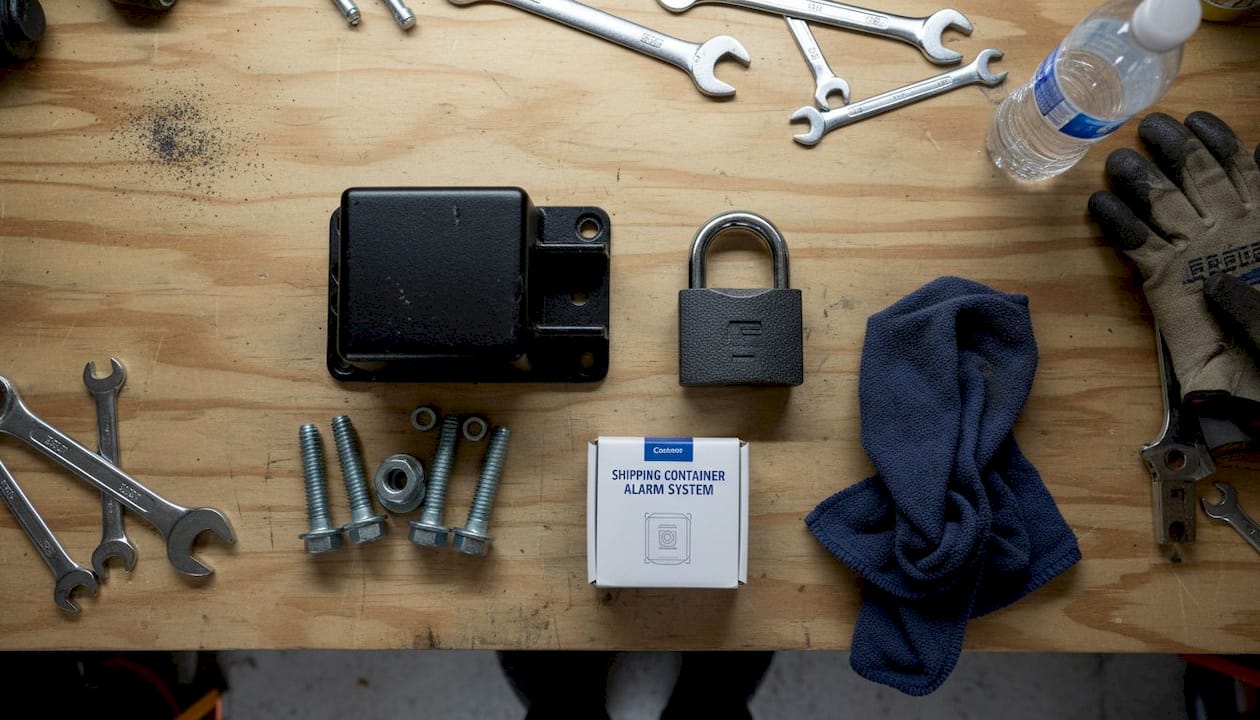
Anchoring containers to the ground using D-rings and heavy bolts prevents towing, which is especially critical for smaller 10ft and 20ft units that can be lifted or dragged. This single step eliminates one of the most common theft methods.
Here is a breakdown of essential security tools:
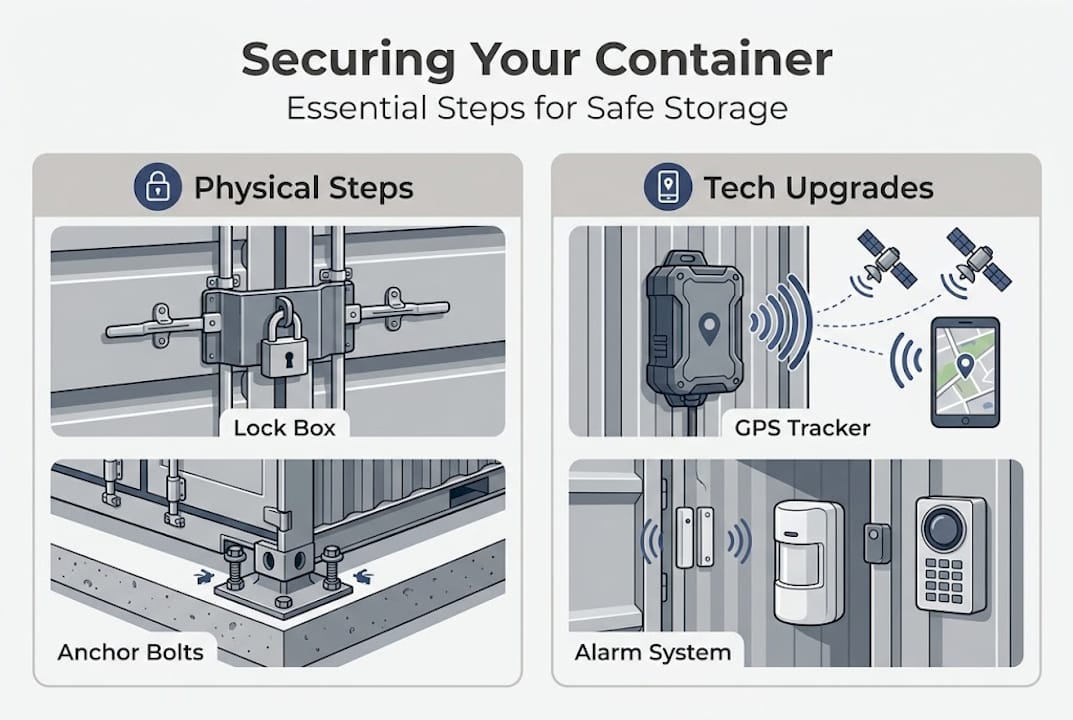
- Lock box: A steel shroud welded over the locking mechanism that prevents bolt cutters from reaching the padlock
- Heavy-duty padlock: Rated for commercial use, ideally a closed-shackle design
- D-rings and anchor bolts: Embedded in concrete or ground to prevent the container from being moved
- GPS tracker: Provides real-time location data and alerts if the container moves
- Alarm system: Motion-triggered or door-contact alarms that alert you or a monitoring service
- Security lighting: Motion-activated lights that deter nighttime activity
- Security camera: Visible cameras reduce opportunistic theft and support insurance claims
| Security device | Effectiveness | Estimated cost | Ease of install |
|---|---|---|---|
| Basic padlock | Low-medium | $20-$80 | Easy |
| Lock box + padlock | High | $80-$200 | Moderate |
| GPS tracker | High | $50-$150/yr | Easy |
| Alarm system | High | $100-$500 | Moderate |
| D-ring anchoring | Very high | $50-$200 | Moderate |
| Smart lock | Very high | $150-$400 | Moderate |
For containers with side access, a side door container with a built-in lock box is a practical starting point that combines access convenience with built-in protection. Before your container arrives, also review site preparation requirements to ensure anchoring is possible on your specific surface.
Pro Tip: Always choose padlocks rated for commercial use with a closed shackle. Open-shackle padlocks are vulnerable to bolt cutters regardless of the lock's overall quality rating.
Step-by-step process to secure your shipping container
With the right equipment ready, follow this process to build a layered security setup that makes your container a hard target.
- Position the container strategically. Place it in a well-lit area with good sightlines from your building or monitoring cameras. Avoid positioning doors facing public roads or hidden corners.
- Anchor the container. Install D-rings through the container's base and bolt them into concrete or compacted ground. This is your first line of defense against towing.
- Install a lock box. Weld or bolt a commercial-grade lock box over the door locking bars. This protects the padlock from direct attack.
- Fit a high-grade padlock. Use a closed-shackle padlock rated for commercial or industrial use. Avoid combination locks on high-value containers.
- Add a GPS tracker. Mount a tracker inside the container in a concealed location. Set up geofencing alerts so you are notified immediately if the container moves.
- Install an alarm system. A door-contact alarm or motion sensor adds an active deterrent. Connect it to a mobile alert or monitoring service.
- Set up lighting and cameras. Motion-activated lights and visible cameras complete the perimeter. Cameras should cover all door access points.
Safety note: On active job sites, always inform your team of alarm codes and lock procedures. Accidental triggers waste response time and can desensitize workers to real alerts.
Layering physical and digital measures is what separates a secure container from a vulnerable one. GPS and smart lock technology has been shown to reduce theft rates by 40 to 78%, delivering strong ROI through both theft reduction and lower insurance premiums. Physical anchoring, as noted, prevents towing and is non-negotiable for smaller units.
For a broader overview of what to consider when setting up your container operation, the complete container buying guide and the container buyer's guide both cover setup considerations in detail.
Pro Tip: Test your alarm system and physically check all locks every month. A lock that fails silently gives you zero warning before a breach.
Verifying security and avoiding common mistakes
Installing security measures is only half the job. Verification and ongoing maintenance determine whether your setup actually holds up.
Use this checklist after initial installation:
- Lock box is firmly attached with no visible gaps or movement
- Padlock shackle is fully engaged and shows no play
- D-ring anchors are tight and embedded in a stable surface
- GPS tracker is active and sending location data
- Alarm system triggers correctly when tested
- Cameras cover all door access points with no blind spots
- Lighting activates on motion without delay
Common mistakes that leave containers exposed:
- Using outdated locks: Older padlocks with open shackles are easy targets. Replace them with closed-shackle commercial models.
- Skipping anchor installation: Many owners secure the door but leave the container movable. This is a critical gap.
- Ignoring alarm tests: Alarms that are never tested often fail silently. Monthly testing is essential.
- Visible lock gaps: A lock box with visible space around the shackle still allows bolt cutter access. Fit matters.
- No access log: Not tracking who has keys or codes makes it impossible to identify internal security issues.
Periodic audits, at least quarterly, catch problems before they become incidents. Without GPS tracking, container recovery rates fall below 25%, which means a stolen container is almost certainly a total loss.
Also review how you are using your containers. If your operation has expanded into business or commercial applications, your security tier may need to scale up. You can also browse available containers with security-ready features built in.
Pro Tip: After upgrading your security setup, review your insurance policy. Many insurers now offer premium reductions for documented use of GPS tracking and commercial-grade locks on high-value assets.
Why traditional methods aren't enough and what works best
A padlock on a door gives a false sense of security. Experienced thieves can defeat a standard padlock in under 30 seconds with the right tools. Physical barriers slow people down, but they rarely stop a determined, prepared criminal.
The data supports a harder look at technology. Advanced security systems including GPS trackers and smart locks reduce theft rates by 40 to 78% and generate measurable insurance savings. That is not a marginal improvement. It is a fundamentally different outcome.
The most effective approach combines both layers. Physical measures like lock boxes, anchor bolts, and closed-shackle padlocks create friction. Technology creates accountability. When a thief knows a container has GPS and an active alarm, the risk-reward calculation changes entirely.
For project managers overseeing multiple sites, container solutions that integrate security-ready hardware from the start are far more cost-effective than retrofitting after an incident. The hybrid model, physical plus digital, is the current industry standard for a reason.
Secure your shipping container with the right solutions
Protecting your containers starts with choosing the right equipment and having access to reliable support when you need it.
A M Shipping Containers offers a full range of new, used, and refurbished units with security-compatible features, including built-in lock boxes and modification options tailored for construction and retail applications. Whether you need a single unit or a fleet of containers for an active job site, the platform provides transparent pricing, 47-point inspection reports, and nationwide delivery. Browse shipping containers to find units ready for immediate security upgrades, or explore container solutions to see customization options that fit your specific security and operational needs.
Frequently asked questions
What is the most secure way to lock a shipping container?
The most secure method combines a heavy-duty lock box with a closed-shackle commercial padlock. For maximum protection, adding a smart lock or GPS tracker reduces theft rates by 40 to 78% and supports faster recovery if a breach occurs.
How can I prevent thieves from moving my shipping container?
Anchor the container to a fixed surface using D-rings and heavy bolts embedded in concrete or compacted ground. This is especially important for smaller 10ft and 20ft units that are easier to tow or lift.
Does technology like GPS or alarms really reduce shipping container theft?
Yes. Smart locks and GPS reduce theft rates by 40 to 78% and also support insurance savings, making them one of the highest-ROI security investments available for container operators.
How often should I inspect my shipping container's security measures?
Inspect all locks, anchors, and alarm systems at least once a month and immediately after any security incident or attempted breach.
Will insurance require certain security features for shipping containers?
Many policies now require documented use of advanced locks and monitoring systems, particularly for high-value assets. Advanced tech adoption is increasingly tied to premium reductions and claim eligibility for commercial container operations.